
Unleash Potential: Top Project Based Learning Activities
project based learning activities

Unleash Potential: Top Project Based Learning Activities

Transform education with dynamic, student-led projects that build essential skills and deep understanding.

Explore Activities

Key Takeaways

  • ✓ PBL boosts student engagement by an average of 20% compared to traditional methods.
  • ✓ Students in PBL environments show significantly higher critical thinking and problem-solving skills.
  • ✓ PBL fosters collaboration and communication, key 21st-century competencies.
  • ✓ Retention rates for information learned through PBL are often 2-3 times higher.

How It Works

1
Define the Driving Question

Start with a compelling, open-ended question that sparks curiosity and guides the entire project. This question should be relevant and challenging for students.

2
Design Authentic Tasks

Create tasks that mirror real-world challenges, allowing students to apply knowledge and skills in meaningful contexts. This involves research, planning, and execution.

3
Facilitate Inquiry & Collaboration

Provide resources and guidance while empowering students to take ownership of their learning. Encourage teamwork, peer feedback, and independent problem-solving.

4
Present & Reflect

Students present their findings or creations to an audience, fostering communication skills. A crucial reflection phase helps them consolidate learning and identify areas for growth.

Understanding the Power of Project-Based Learning Examples

Crop anonymous multiracial female students sitting at table and doing academic project together Photo: Zen Chung / Pexels
Project-based learning (PBL) is more than just a buzzword in education; it's a transformative pedagogical approach that shifts the focus from rote memorization to deep, experiential understanding. At its core, PBL engages students in sustained inquiry, culminating in a real-world product or presentation. Unlike traditional teaching methods where students passively receive information, PBL immerses them in complex problems, compelling them to ask questions, conduct research, collaborate with peers, and develop innovative solutions. This process naturally cultivates a suite of essential skills often referred to as 21st-century competencies: critical thinking, creativity, collaboration, and communication. These aren't just academic skills; they are life skills, crucial for navigating an ever-evolving world. Consider the impact of a science project where students design and build a miniature water filtration system for a simulated polluted town, rather than just memorizing facts about water cycles. They encounter real challenges, troubleshoot problems, refine their designs, and present their findings, understanding the science not as abstract theory but as a practical tool for solving genuine issues. This hands-on, minds-on approach fosters intrinsic motivation. When students see the direct relevance of their learning to real-world contexts, their engagement skyrockets. They are no longer just learning for a test; they are learning to make an impact. This deep engagement leads to better retention of knowledge and a more profound understanding of complex concepts. The beauty of project-based learning lies in its versatility. It can be implemented across all grade levels and subject areas, from elementary school students designing a community garden to high schoolers developing a marketing campaign for a local business. Each project provides unique opportunities for students to connect academic content to authentic experiences, making learning meaningful and memorable. The shift to PBL also empowers educators to become facilitators rather than just lecturers, guiding students through discovery and encouraging independent thought. For more insights into modern educational practices, explore topics on innovative teaching methods. This dynamic interaction between teacher and student creates a vibrant learning environment where curiosity is celebrated and challenges are embraced as opportunities for growth. Furthermore, PBL often integrates multiple disciplines, blurring the lines between subjects and mirroring the interconnectedness of real-world problems. A project on sustainable energy, for example, might involve elements of physics, engineering, economics, and even social studies, providing a holistic learning experience.

Designing Effective Project Based Learning Activities for All Grades
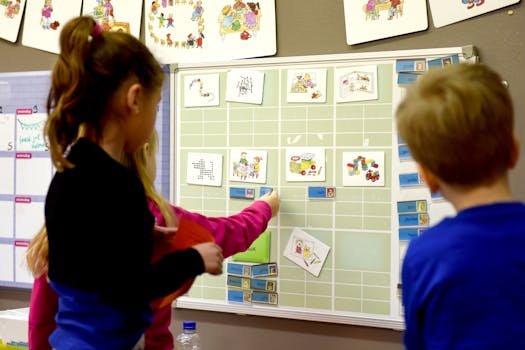
Children in a classroom interact with an educational board to enhance learning and teamwork. Photo: Arthur Krijgsman / Pexels
Crafting impactful project based learning activities requires thoughtful design and a clear understanding of learning objectives. The cornerstone of any successful PBL unit is a compelling "driving question" – an open-ended, challenging question that cannot be answered with a simple yes or no, and that propels student inquiry throughout the project. For elementary students, this might be, "How can we make our school playground more accessible for everyone?" leading to research on different needs, design thinking, and even building prototypes. For middle schoolers, "How can our community reduce its carbon footprint?" could ignite investigations into renewable energy, waste management, and public awareness campaigns. High school students might tackle, "How can we develop a sustainable business model for a product that solves a local problem?" integrating economics, market research, and ethical considerations. The key is to ensure the question is authentic, relevant to students' lives, and requires them to apply academic content in innovative ways. Beyond the driving question, effective PBL activities incorporate several critical components. First, they demand sustained inquiry, meaning students spend a significant amount of time investigating, researching, and grappling with complex ideas, rather than completing a quick, one-off task. This often involves multiple iterations, revisions, and opportunities for feedback. Second, PBL emphasizes authenticity, connecting learning to real-world contexts, tools, and audiences. Students might interview community experts, use professional software, or present their work to local stakeholders, making their efforts feel genuinely purposeful. Third, student voice and choice are paramount. When students have agency in selecting research topics, project formats, or even team roles, their motivation and ownership of the learning process dramatically increase. This fosters a sense of empowerment and responsibility, crucial for developing self-directed learners. Fourth, collaboration is often a central element, teaching students how to work effectively in teams, negotiate ideas, resolve conflicts, and leverage diverse strengths. Finally, a strong PBL activity culminates in a public product – something tangible that students can share with an audience beyond their classroom, be it a presentation, a website, an invention, or a community service initiative. This public display of learning provides a powerful incentive for quality work and offers valuable opportunities for reflection and celebration of achievement. When these elements are thoughtfully integrated, project based learning activities become powerful vehicles for deep learning and skill development across all grade levels.

Implementing Project Based Learning Activities: Best Practices and Strategies
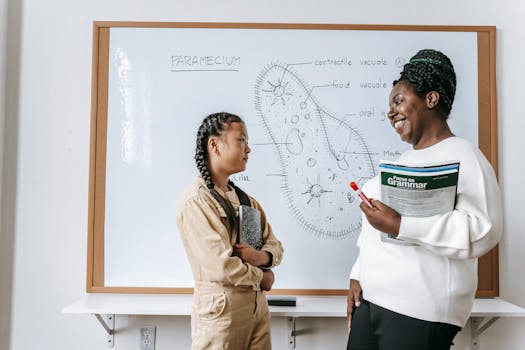
Side view of smiling African American female teacher holding textbooks while communicating with Asian teenage girl after lesson Photo: Katerina Holmes / Pexels
Successful implementation of project based learning activities goes beyond just assigning a project; it requires strategic planning, ongoing facilitation, and a supportive classroom environment. One of the primary best practices is to clearly define learning goals and align them directly with curriculum standards. While PBL offers flexibility, it's essential that projects are intentionally designed to teach specific content knowledge and skills. Educators should map out the learning objectives that each phase of the project will address, ensuring that academic rigor is maintained. Another crucial strategy is to scaffold the learning process. Complex projects can be overwhelming, so breaking them down into manageable phases with clear checkpoints and interim deadlines helps students stay on track. This might involve providing mini-lessons on research skills, offering templates for project planning, or structuring peer feedback sessions. Think of it as guiding students on an expedition, providing maps and tools, but allowing them to chart their own course within defined boundaries. Effective facilitation is key. Teachers in a PBL classroom act less as lecturers and more as coaches, mentors, and resource providers. This involves asking probing questions to encourage deeper thinking, providing constructive feedback, helping students overcome obstacles, and fostering a culture of inquiry and experimentation. It also means stepping back and allowing students to grapple with challenges, fostering resilience and problem-solving abilities. Creating a supportive classroom culture where risk-taking is encouraged and mistakes are viewed as learning opportunities is vital. Students need to feel safe to explore ideas, even if they don't always succeed on the first try. Furthermore, integrating technology seamlessly can enhance PBL. Digital tools for research, collaboration (like shared documents or project management software), creation (like video editing or graphic design), and presentation can empower students to produce high-quality, engaging work. Finally, robust assessment strategies are critical. PBL assessment should be multifaceted, going beyond traditional tests. It can include rubrics for evaluating collaboration, critical thinking, and the quality of the final product, as well as student self-reflection and peer assessment. This comprehensive approach provides a more holistic view of student learning and growth. For deeper dives into pedagogical approaches, explore resources on modern educational pedagogy. By focusing on these best practices, educators can unlock the full potential of project based learning activities, creating truly transformative educational experiences.

Common Pitfalls and How to Avoid Them in Project Based Learning

Teenager in hoodie writing math formulas on a blackboard indoors, showcasing problem-solving skills. Photo: https://kaboompics.com/ / Pexels
While the benefits of project based learning activities are numerous, several common pitfalls can derail even the most well-intentioned efforts. Being aware of these challenges and implementing proactive strategies can ensure a smoother and more effective PBL experience. **1. Lack of Clear Learning Goals:** * **Pitfall:** Projects become fun but lack academic substance, failing to connect to curriculum standards. * **Avoidance:** Begin with the end in mind. Clearly define the specific content knowledge and skills students will acquire. Use a backward design approach, outlining desired results, acceptable evidence, and then planning learning experiences. **2. Insufficient Scaffolding:** * **Pitfall:** Students feel overwhelmed, get stuck, or produce low-quality work because they lack the necessary skills or guidance. * **Avoidance:** Break down complex projects into smaller, manageable steps. Provide mini-lessons on research, collaboration, or specific tool usage. Offer checklists, graphic organizers, and regular check-ins. **3. Unequal Participation (Free Riders):** * **Pitfall:** In group projects, some students do all the work while others contribute minimally. * **Avoidance:** Implement clear roles and responsibilities within groups. Use peer evaluations and self-assessments as part of the grading. Regularly monitor group dynamics and intervene when necessary. **4. Overemphasis on the Product, Not the Process:** * **Pitfall:** The focus shifts solely to the final output, neglecting the learning journey, critical thinking, and skill development along the way. * **Avoidance:** Design assessment to evaluate both the process (e.g., research logs, drafts, collaboration skills) and the product. Emphasize reflection at various stages of the project. **5. Poor Time Management:** * **Pitfall:** Projects run out of time, feel rushed, or drag on too long, losing student interest. * **Avoidance:** Plan a realistic timeline with clear milestones and deadlines. Teach students time management skills and provide regular reminders. Be flexible but firm with expectations. By proactively addressing these potential issues, educators can create a robust framework for project based learning activities that genuinely fosters deep learning and skill acquisition, avoiding common frustrations for both students and teachers.

Comparison

FeatureProject-Based Learning (PBL)Traditional Lecture ModelActivity-Based Learning (ABL)
Engagement LevelHigh (intrinsic motivation)Moderate (extrinsic motivation)Medium-High (hands-on)
Skill Development FocusCritical thinking, collaboration, problem-solvingMemorization, recallApplication of specific skills
Learning DepthDeep, conceptual understandingSurface-level, factual recallPractical understanding
Authenticity
Teacher RoleFacilitator, coachLecturer, information providerGuide, instructor
Student AutonomyHigh (choice, ownership)Low (directed learning)Moderate (guided choice)

What Readers Say

"Implementing project based learning activities transformed my 5th-grade classroom. My students are more engaged, ask deeper questions, and genuinely enjoy coming to school. Their critical thinking skills have visibly improved!"

Sarah Miller · Austin, TX

"As a high school science teacher, PBL has allowed me to connect abstract concepts to real-world applications. The quality of student projects and their understanding of complex scientific principles have soared since I adopted these methods."

David Chen · Seattle, WA

"Our school adopted a PBL curriculum two years ago, and we've seen a 15% increase in student retention of key concepts across all subjects. The collaborative skills students develop are invaluable for their future."

Emily Rodriguez · Miami, FL

"While project based learning activities require more planning upfront, the payoff in student engagement and deeper learning is undeniable. My only critique is the initial time investment, but it's worth it in the long run."

Mark Johnson · Denver, CO

"Even in my adult learning workshops, project based learning activities have proven incredibly effective. Participants apply new skills immediately, leading to better retention and practical implementation in their professional lives."

Jessica Lee · Chicago, IL

Frequently Asked Questions

What are the core benefits of using project based learning activities?

Project based learning activities offer numerous benefits, including enhanced critical thinking, problem-solving, and collaboration skills. They significantly boost student engagement and motivation by connecting learning to real-world contexts, leading to deeper understanding and improved long-term retention of knowledge. Students also develop a stronger sense of ownership over their learning.

Is project based learning suitable for all age groups and subjects?

Yes, project based learning is highly adaptable and can be effectively implemented across all age groups, from kindergarten to higher education, and in virtually every subject area. The key is to tailor the complexity, scope, and scaffolding of the projects to the developmental level and prior knowledge of the students, ensuring the driving questions are age-appropriate and engaging.

How do I start implementing project based learning activities in my classroom?

To start, identify a compelling, open-ended driving question related to your curriculum. Then, design an authentic task that requires students to investigate, create, and present a solution or product. Provide clear learning objectives, scaffold the process with resources and mini-lessons, and plan for opportunities for collaboration, feedback, and public presentation. Start small with one project and build from there.

What is the typical cost or resource investment for PBL?

The cost and resource investment for PBL can vary widely. Many projects can be implemented with minimal cost using readily available classroom supplies or free online resources. However, some projects might benefit from specific materials, software, or field trips, which would incur additional costs. The primary investment is often time for planning, facilitation, and professional development for educators.

How does PBL differ from traditional hands-on activities or experiments?

While PBL often involves hands-on activities, it differs in its depth, duration, and driving purpose. PBL is characterized by a sustained inquiry into a complex, open-ended question, culminating in a public product or presentation. Traditional hands-on activities or experiments are often shorter, more prescriptive, and primarily designed to confirm a known principle, whereas PBL emphasizes student-led investigation, problem-solving, and creation.

Who benefits most from project based learning activities?

While all students can benefit, project based learning activities particularly benefit students who thrive in hands-on environments, those who are self-directed learners, and those who benefit from seeing the real-world relevance of their studies. It also helps students develop crucial 21st-century skills that are highly valued in higher education and the modern workforce.

Are there any risks or challenges associated with PBL implementation?

Yes, challenges can include ensuring all students participate equally, managing time effectively for complex projects, ensuring academic rigor isn't lost, and the initial learning curve for educators. However, these risks can be mitigated through careful planning, clear expectations, effective scaffolding, and ongoing professional development.

What is the future outlook for project based learning in education?

The future outlook for project based learning is very positive. As educational systems increasingly recognize the need to prepare students for a rapidly changing world that demands critical thinking, creativity, and collaboration, PBL is becoming a cornerstone of innovative pedagogy. Expect to see wider adoption, more sophisticated digital tools supporting PBL, and increased integration into standardized curricula.

Ready to revolutionize your classroom or learning environment? Dive into the world of project based learning activities and empower your students with the skills, knowledge, and confidence they need to succeed in school and beyond. Start designing your next impactful project today!

Topics: project based learning activitiesPBL examplesexperiential learningstudent engagement strategies21st century skills
Leo List

IE Escorts NO Escorts US Escorts NZ Escorts AU Escorts
Brampton weed
Adultwork EstrelaBet Vai de Bet R7 Bet Betão Galera Bet Rainbet Bet9ja Shop SportyBet BetKing Sisal Loto Foot Hollywoodbets YesPlay Odibets RushBet Jugabet BetWarrior BetCity MSport betPawa Fortebet