Unlocking Learning: The Future of Education Technology
future of education technology

Unlocking Learning: The Future of Education Technology

Dive into the innovations poised to revolutionize how students learn and educators teach across the United States.

Discover the Future

Key Takeaways

  • ✓ The global EdTech market is projected to reach over $400 billion by 2025.
  • ✓ Personalized learning, driven by AI, is becoming a cornerstone of modern pedagogy.
  • ✓ Extended Reality (XR) technologies like VR and AR are creating immersive learning experiences.
  • ✓ Data analytics is increasingly used to identify learning gaps and optimize instructional strategies.

How It Works

1
Identify Learning Needs

AI-powered platforms assess individual student strengths, weaknesses, and preferred learning styles. This initial diagnostic step creates a foundation for tailored educational paths.

2
Curate Personalized Content

Algorithms then match students with relevant digital resources, interactive modules, and adaptive assessments. Content is dynamically adjusted to maintain optimal challenge levels.

3
Engage Through Immersive Experiences

Technologies like VR and AR transport students to virtual environments, allowing hands-on exploration of complex concepts. This fosters deeper understanding and engagement beyond traditional methods.

4
Provide Real-time Feedback & Support

EdTech tools offer immediate feedback on performance and progress, enabling timely intervention and support from educators. This continuous loop of assessment and adjustment optimizes the learning journey.

The AI Revolution in Educational Technology
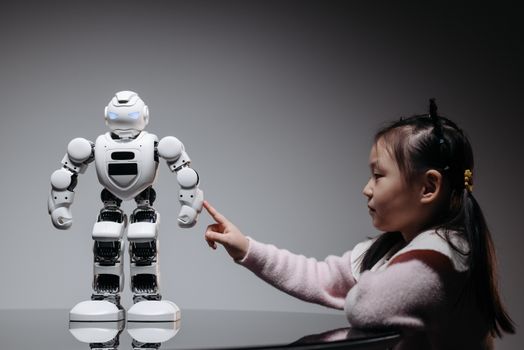
A young girl engaging with a robotic toy, highlighting curiosity and innovation. Photo: Pavel Danilyuk / Pexels
Artificial Intelligence (AI) stands at the forefront of the impending transformation in education technology, promising an era of unprecedented personalization and efficiency. Far beyond simple automation, AI is evolving into a sophisticated partner for both students and educators, capable of adapting to individual learning styles, identifying knowledge gaps, and even predicting future academic challenges. One of the most significant impacts of AI is its ability to facilitate truly personalized learning paths. Traditional classrooms often struggle to cater to the diverse needs of 20-30 students simultaneously, leading to some students feeling left behind and others unchallenged. AI-driven platforms, however, can dynamically adjust curriculum, pace, and content difficulty based on a student's real-time performance and engagement. Imagine a system that recognizes when a student is struggling with a particular mathematical concept and immediately provides supplementary exercises, different explanations, or even connects them with a virtual tutor, all without direct teacher intervention. Conversely, for advanced learners, AI can offer accelerated content and complex problem-solving scenarios to keep them engaged and foster deeper critical thinking. Beyond personalization, AI is also revolutionizing assessment. Instead of relying solely on standardized tests, AI can analyze a broader spectrum of student work, from essays to coding projects, providing more nuanced and comprehensive feedback. Natural Language Processing (NLP), a subset of AI, can evaluate written assignments for grammar, syntax, coherence, and even conceptual understanding, significantly reducing the grading burden on teachers and providing students with instant, actionable insights. Furthermore, AI-powered analytics can help educators identify trends and patterns across their student population, highlighting areas where teaching strategies might need adjustment or where specific groups of students might require additional support. This data-driven approach moves education from a reactive model to a proactive one, allowing for timely interventions that can prevent students from falling behind. The integration of AI also extends to administrative tasks, automating scheduling, attendance tracking, and resource allocation, freeing up valuable time for teachers to focus on instruction and direct student interaction. As AI continues to advance, we can expect even more sophisticated applications, such as AI companions that act as personalized mentors, guiding students through complex projects and fostering independent learning skills. The ethical considerations surrounding data privacy and algorithmic bias remain critical, ensuring that the deployment of AI in education is equitable and serves all students effectively. The future of education technology is undeniably intertwined with the intelligent capabilities of AI, promising a more responsive, engaging, and effective learning experience for all. Discover more about how AI is shaping learning environments.

Immersive Learning: The Power of Extended Reality (XR)
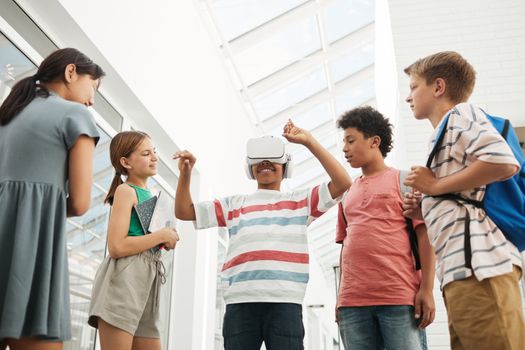
A group of diverse children immersed in virtual reality technology indoors. Photo: Norma Mortenson / Pexels
The boundary between the physical and digital worlds is blurring in education, thanks to the rapid advancements in Extended Reality (XR) technologies, encompassing Virtual Reality (VR), Augmented Reality (AR), and Mixed Reality (MR). These immersive tools are poised to transform passive learning into active, experiential engagement, offering students opportunities to explore concepts in ways previously unimaginable. VR, in particular, transports students to entirely new environments. Imagine dissecting a virtual frog in biology without ethical concerns, exploring ancient Roman architecture from within, or walking on the moon to understand astrophysics. These experiences move beyond theoretical understanding, providing visceral, memorable interactions that deepen comprehension and retention. The ability to manipulate virtual objects, conduct simulated experiments, and interact with historical figures or complex machinery in a safe, controlled environment offers unparalleled learning opportunities that traditional classrooms simply cannot replicate. This hands-on approach is particularly beneficial for subjects that are difficult or dangerous to teach in real life, such as chemistry experiments or surgical training. Augmented Reality (AR), on the other hand, overlays digital information onto the real world. Think of using a smartphone or tablet to scan a textbook page and watch 3D models of organs pop up, or pointing your device at a historical landmark to see virtual reconstructions of its past. AR apps can turn everyday objects into interactive learning tools, making learning ubiquitous and context-aware. It allows for a seamless integration of digital content into physical spaces, enhancing real-world exploration and discovery. For instance, students on a field trip could use AR to identify plant species, learn about geological formations, or visualize historical events right where they happened. Mixed Reality (MR) takes this a step further, allowing users to interact with virtual objects as if they were physically present in their real environment, opening doors for collaborative learning and complex problem-solving in shared virtual spaces. The benefits of XR extend beyond engagement to improved learning outcomes. Studies have shown that immersive learning can lead to higher knowledge retention, better problem-solving skills, and increased motivation. It caters to different learning styles, particularly kinesthetic and visual learners, by providing multi-sensory experiences. However, the widespread adoption of XR in education faces challenges, including the cost of hardware, the development of quality educational content, and ensuring equitable access. As the technology matures and becomes more affordable, and as content creators develop compelling educational experiences, XR is set to become a cornerstone of the future of education technology, offering truly transformative learning journeys that prepare students for a world increasingly shaped by digital interaction. The ability to learn by doing, exploring, and experiencing will redefine what it means to be educated in the 21st century.

Adaptive Learning and Data-Driven Insights

Professional instructor teaching math concepts online with a laptop and whiteboard. Photo: Vanessa Garcia / Pexels
Adaptive learning systems represent a paradigm shift in educational delivery, moving away from the 'one-size-fits-all' model to highly individualized instructional approaches. At their core, these systems leverage sophisticated algorithms and machine learning to continuously adjust the learning experience based on a student's real-time performance, progress, and even their emotional state. Unlike static digital textbooks, adaptive platforms are dynamic, offering content, exercises, and assessments that are precisely tailored to where a student is in their learning journey. If a student masters a concept quickly, the system can automatically advance them to more challenging material. Conversely, if they struggle, it can provide additional practice, alternative explanations, or break down complex topics into smaller, more digestible chunks. This ensures that every student is challenged appropriately, preventing boredom for advanced learners and frustration for those who need more support. Central to the effectiveness of adaptive learning is the robust collection and analysis of data. Every interaction a student has with the platform – every answer, every click, every pause – generates data points that are meticulously analyzed. This data provides invaluable insights into individual learning patterns, common misconceptions, and areas of strength and weakness. For educators, this means moving beyond anecdotal observations to having a comprehensive, data-driven understanding of each student's progress. Dashboards can highlight students who are at risk of falling behind, identify specific concepts that an entire class is struggling with, and even suggest personalized interventions. This empowers teachers to make more informed instructional decisions, customize their classroom activities, and provide targeted support where it's needed most. The data also allows for continuous improvement of the educational content itself, as developers can see which modules are most effective and where students consistently get stuck. Moreover, data-driven insights are not just about reactive adjustments; they also enable predictive analytics. By analyzing historical data and current performance, these systems can forecast potential learning obstacles and suggest proactive strategies to mitigate them. For example, a system might predict that a student is likely to struggle with a future topic based on their performance on prerequisite skills, prompting the teacher to provide early intervention. While the benefits are immense, the ethical implications of data collection, privacy, and algorithmic bias must be carefully managed. Ensuring transparency in how data is used and protecting student information are paramount. When implemented thoughtfully, adaptive learning and data-driven insights offer a powerful future for education technology, creating highly responsive, efficient, and equitable learning environments that truly put the student at the center of the educational process. Explore how data analytics is revolutionizing educational assessment.

Key Trends and Overcoming Challenges in EdTech Adoption

Unrecognizable African American male student writing mathematical formulas on chalkboard while studying in classroom with faceless black classmate during lesson Photo: Monstera Production / Pexels
The trajectory of education technology is marked by several overarching trends that will define its future, alongside persistent challenges that require thoughtful navigation. Beyond AI and XR, we're seeing a significant push towards microlearning and personalized credentialing. Microlearning involves delivering content in small, digestible chunks, ideal for busy learners and for reinforcing specific skills. Personalized credentialing, often supported by blockchain technology, allows students to earn and showcase verifiable skills and competencies, moving beyond traditional degrees to a more granular and flexible recognition of learning. The rise of gamification continues to make learning more engaging, using game-like elements to motivate students and make complex topics more accessible. Furthermore, the emphasis on socio-emotional learning (SEL) integrated with technology is growing, with platforms designed to help students develop empathy, collaboration, and self-awareness – critical skills for the 21st century. However, the path to widespread and effective EdTech integration is fraught with challenges. One of the most significant hurdles is ensuring equitable access. The digital divide, where students from lower socio-economic backgrounds lack reliable internet access or necessary devices, remains a critical barrier. Without addressing this fundamental issue, the promise of advanced EdTech will only exacerbate existing educational inequalities. Another challenge lies in teacher training and professional development. Many educators, while enthusiastic, may lack the necessary skills or confidence to effectively integrate new technologies into their pedagogy. Adequate, ongoing training is crucial, moving beyond basic tool usage to demonstrating how technology can fundamentally enhance teaching and learning outcomes. Furthermore, the sheer volume of available EdTech tools can be overwhelming, leading to 'tool fatigue' and a lack of coherent strategy. Schools need clear frameworks for evaluating, adopting, and integrating technologies that align with their educational goals. Interoperability between different platforms is also a concern; a fragmented ecosystem can hinder data flow and create inefficiencies. Finally, the ethical considerations around student data privacy and the potential for algorithmic bias in AI-driven systems demand rigorous attention. Robust policies, transparent practices, and continuous oversight are essential to protect students and ensure that technology serves as a force for good. Overcoming these challenges requires a collaborative effort from policymakers, technology developers, educators, and communities to build an inclusive, effective, and ethical future for education technology.
  • Digital Divide: Ensure equitable access to devices and internet connectivity for all students.
  • Teacher Professional Development: Provide ongoing, hands-on training for educators to effectively integrate new technologies.
  • Strategic Integration: Develop clear institutional strategies for evaluating and adopting EdTech tools aligned with learning objectives.
  • Interoperability: Advocate for and implement systems that allow different EdTech platforms to communicate seamlessly.
  • Data Privacy & Ethics: Establish robust policies and practices to protect student data and prevent algorithmic bias.
  • Curriculum Alignment: Integrate EdTech tools as enhancements to, rather than replacements for, sound pedagogical practices.
  • Funding & Sustainability: Secure adequate and consistent funding for EdTech infrastructure, software, and support.

Comparison

FeaturePersonalized Learning PlatformsVR/AR Immersive ToolsTraditional Classroom SoftwareAI Tutors
Customized Pace
Experiential Learning
Real-time Feedback
Content AdaptabilityHighMediumLowHigh
Engagement LevelHighVery HighMediumHigh
Teacher Workload ReductionModerateLowLowHigh

What Readers Say

"The advancements in AI for personalized learning have been game-changing in my high school science classes. Students who once struggled now thrive because the content adapts to their pace, and I can focus on deeper discussions. It truly democratizes access to quality instruction."

Dr. Emily Chen · Boston, MA

"Using VR for history lessons has transformed engagement. My students can 'walk' through ancient Rome or witness historical events firsthand. Their retention and enthusiasm have skyrocketed, making history come alive in a way textbooks never could."

Mr. David Lee · Austin, TX

"As a district administrator, implementing adaptive learning platforms has led to a measurable improvement in test scores and student confidence. The data insights allow us to pinpoint areas for improvement across the district, resulting in more targeted interventions and better resource allocation."

Sarah Rodriguez · Phoenix, AZ

"While the potential of EdTech is immense, particularly with AR, the initial setup and content creation can be a steep learning curve. However, once integrated, the interactive elements significantly enhance student understanding, especially in STEM fields. We're still working on making it seamless."

Michael Brown · Seattle, WA

"My son, who has a learning disability, struggled immensely with traditional methods. An AI-powered tutor has been a revelation, providing endless patience and customized explanations. He's now catching up and, more importantly, enjoying learning again, which is priceless."

Jessica Kim · Denver, CO

Frequently Asked Questions

What are the biggest trends shaping the future of education technology?

The biggest trends include the pervasive integration of Artificial Intelligence (AI) for personalized learning, the widespread adoption of Extended Reality (XR) like VR and AR for immersive experiences, the rise of adaptive learning systems driven by data analytics, and the increasing focus on microlearning and personalized credentialing to cater to diverse learner needs and career paths. These technologies are fundamentally altering how content is delivered, consumed, and assessed, fostering more engaging and effective educational environments.

Is the future of education technology going to replace teachers?

No, the future of education technology is not intended to replace teachers but rather to empower them. EdTech tools, especially AI and adaptive platforms, handle repetitive tasks, provide personalized support, and offer data insights, freeing up teachers to focus on higher-level instruction, mentorship, and socio-emotional development. Technology acts as a powerful assistant, enhancing the teacher's capacity to engage and support every student more effectively.

How can schools effectively integrate new education technologies?

Effective integration requires a multi-faceted approach: first, conducting a clear needs assessment to select technologies that align with pedagogical goals; second, investing in comprehensive and ongoing professional development for educators; third, ensuring robust technical infrastructure and support; and fourth, fostering a culture of innovation and experimentation. Starting with pilot programs and gathering feedback is also crucial for successful, scalable implementation.

What is the cost associated with implementing advanced education technology?

The cost varies significantly depending on the scale and type of technology. Initial investments can include hardware (e.g., VR headsets, devices), software licenses, infrastructure upgrades (e.g., Wi-Fi), and professional development. While some advanced solutions can be substantial, open-source options, freemium models, and government grants or philanthropic initiatives can help mitigate costs, especially when focusing on long-term benefits and improved outcomes.

How does the future of education technology compare to traditional learning methods?

The future of education technology offers significant advantages over traditional methods by providing personalized learning paths, immediate feedback, immersive and interactive experiences, and data-driven insights for continuous improvement. While traditional methods rely heavily on uniform instruction and less individualized pacing, EdTech allows for adaptive content, caters to diverse learning styles, and makes learning more engaging and relevant for a wider range of students, enhancing rather than replacing foundational pedagogical principles.

Who should embrace the future of education technology?

Everyone involved in the educational ecosystem should embrace the future of education technology: K-12 schools, higher education institutions, corporate training departments, and individual lifelong learners. Educators can leverage tools for better instruction, administrators for improved efficiency, and students for more engaging and effective learning. It's crucial for anyone seeking to stay relevant and competitive in an increasingly digital world.

What are the potential risks or ethical concerns with advanced EdTech?

Potential risks include the digital divide exacerbating educational inequality, concerns over student data privacy and security, the potential for algorithmic bias in AI systems affecting fairness, and the risk of over-reliance on technology diminishing critical thinking or human interaction. Addressing these requires robust privacy policies, ethical AI development, digital literacy education, and a commitment to equitable access and responsible use.

How will education technology prepare students for future careers?

Education technology prepares students for future careers by fostering essential 21st-century skills like critical thinking, problem-solving, digital literacy, collaboration, and adaptability. Through project-based learning, immersive simulations, and personalized skill development pathways, EdTech equips students with practical experience, digital fluency, and the capacity for lifelong learning, making them more competitive and resilient in a rapidly evolving job market.

The future of education technology is not a distant dream but a rapidly unfolding reality. By understanding and embracing these transformative innovations, we can collectively build a more engaging, equitable, and effective learning landscape for all. Start exploring how these advancements can empower your educational journey today.

Topics: future of education technologyedtech trendspersonalized learningAI in educationvirtual reality education
Leo List
Brampton weed
Adultwork