
How to Compare Online Degree Programs Effectively
Unlock your future by mastering the art of evaluating online degree options to find the perfect fit for your academic and career goals.
Start Comparing NowKey Takeaways
- ✓ Over 6 million students are enrolled in online courses in the US.
- ✓ Accreditation is paramount for transferability and employer recognition.
- ✓ Online degrees often offer more flexibility but require strong self-discipline.
- ✓ The average cost of an online bachelor's degree ranges from $38,000 to $60,000.
How It Works
Identify your career aspirations, desired field of study, and personal learning style. This clarity will guide your search and help you filter irrelevant programs.
Verify regional or national accreditation for all prospective institutions and programs. Investigate university rankings and read reviews to gauge academic quality and employer perception.
Dive into curriculum details, faculty expertise, and available student support services. Consider the program's format, whether it's synchronous, asynchronous, or a hybrid.
Compare tuition fees, technology costs, and textbook expenses. Explore scholarship opportunities, federal aid, and employer tuition reimbursement programs to understand the true financial commitment.
Understanding Accreditation and Its Importance in Online Degrees
 Photo: Sangeeth / Pexels
Evaluating Program Structure, Flexibility, and Student Support
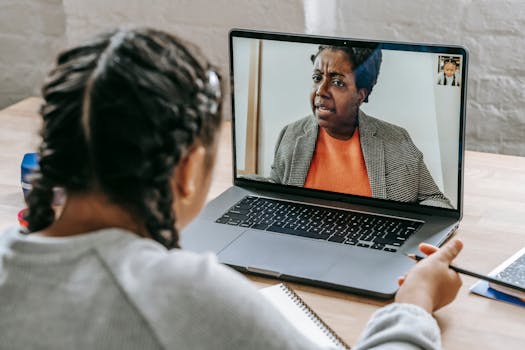 Photo: Katerina Holmes / Pexels
Cost, Financial Aid, and Return on Investment (ROI) of Online Degrees
 Photo: www.kaboompics.com / Pexels
Common Pitfalls and Smart Strategies for Choosing an Online Program
 Photo: Ann H / Pexels
Comparison
| Feature | Highly Flexible Program | Structured Cohort Program | Hybrid Blended Program |
|---|---|---|---|
| Accreditation | Regional | Regional | Regional |
| Learning Pace | Self-paced, asynchronous | Fixed, synchronous | Mix of self-paced & live |
| Student Interaction | Forums, email | Live video, group projects | Both online and in-person/live virtual |
| Ideal for | Busy professionals, self-starters | Students needing structure, networking | Those desiring flexibility with some face-time |
| Cost (Average) | $40,000 - $55,000 | $45,000 - $65,000 | $42,000 - $60,000 |
| Technical Support | 24/7 online | Business hours + limited after-hours | Standard business hours |
| Career Services | Virtual advising, job boards | Virtual & campus career fairs | Both virtual and campus-based |
What Readers Say
"Comparing online degree programs felt overwhelming until I used a systematic approach. I prioritized regional accreditation and found a program that perfectly fit my work schedule. It truly changed my career trajectory."
Sarah J. · Austin, TX"I was skeptical about online degrees, but after thoroughly researching and comparing programs, I found one with incredible faculty and robust student support. My online MBA has already opened new doors."
Mark D. · Chicago, IL"Thanks to careful comparison of costs and financial aid, I was able to pursue my Bachelor's in Marketing completely online without accumulating massive debt. I graduated last year and secured a great position."
Jessica L. · Miami, FL"The program I chose was excellent, though I wish I had paid more attention to the technical requirements beforehand. A few times, my older laptop struggled, but the academic content and flexibility were top-notch."
David R. · Seattle, WA"As a working parent, the ability to compare online degree programs based on flexibility was crucial. I found an asynchronous program that let me learn on my own terms, and the virtual community was surprisingly strong."
Emily C. · Denver, COFrequently Asked Questions
What is the single most important factor when I compare online degree programs?
Accreditation is undeniably the most critical factor. Ensuring that an institution and its specific program are regionally accredited guarantees the validity of your degree, allows for credit transfer, and ensures employer recognition. Without proper accreditation, your degree may hold little value.
Are online degrees as respected as traditional degrees by employers?
Yes, for the most part. As online education has matured, reputable employers increasingly recognize accredited online degrees as equivalent to traditional ones. The key is that the degree comes from an accredited and well-regarded institution, not merely that it was completed online.
How do I verify a program's accreditation?
You can verify accreditation by checking the Council for Higher Education Accreditation (CHEA) database or the U.S. Department of Education's website. These official sources list all recognized accrediting bodies and the institutions they accredit.
Is an online degree cheaper than a traditional on-campus degree?
Not always. While online degrees might save on commuting, housing, and campus fees, tuition rates can be comparable or even higher than in-state tuition for some traditional programs. Always compare the total cost, including all fees and materials, for both online and on-campus options.
How do synchronous and asynchronous online programs differ?
Synchronous programs require students to attend live online classes at specific times, offering real-time interaction. Asynchronous programs provide more flexibility, allowing students to access materials and complete assignments on their own schedule within given deadlines. Your learning style and availability should guide your choice.
Who is an online degree best suited for?
Online degrees are ideal for self-motivated individuals who require flexibility due to work, family commitments, or geographical limitations. They suit those who are comfortable with technology, can manage their time effectively, and thrive in an independent learning environment.
What if I start an online program and realize it's not for me?
Most universities have withdrawal policies and offer academic advising. It's crucial to understand these policies and communicate with your advisor early if you're struggling. Some programs may allow for a leave of absence or a transfer of credits to another program, but always check the specific institution's rules.
How will AI impact online degree programs in the future?
AI is expected to personalize learning experiences, offer intelligent tutoring, and automate administrative tasks in online degree programs. It will likely enhance accessibility, provide more tailored feedback, and help educators identify at-risk students, making online learning even more adaptive and effective.
Embarking on an online degree journey is a significant step towards personal and professional growth. By diligently applying the strategies to compare online degree programs outlined in this guide, you empower yourself to make a choice that truly aligns with your aspirations and sets you up for success. Don't just pick a program; choose the right one for you.