
Unlocking Learning: Best Educational Apps for Kids
Transform screen time into smart time with top-rated apps designed to educate and entertain your children.
Find Their Next Favorite AppKey Takeaways
- ✓ Over 75% of parents believe educational apps are beneficial for their children's learning.
- ✓ Interactive apps can improve problem-solving skills by up to 30% in young learners.
- ✓ Personalized learning paths offered by many apps cater to individual child's pace and style.
- ✓ Screen time quality matters more than quantity when it comes to developmental benefits.
How It Works
Consider your child's age, interests, and areas where they could use extra support. Are you focusing on literacy, numeracy, or creative development?
Explore our curated list of the best educational apps, reading reviews and checking out features. Look for age-appropriateness and curriculum alignment.
Download a few promising apps and let your child try them out. Observe their engagement, understanding, and enjoyment with the content.
Incorporate the chosen apps into a balanced learning routine and periodically check your child's progress. Adjust app choices as their needs evolve.
Why Educational Apps Are Essential for Modern Kids
 Photo: Ryan Delfin / Pexels
Moreover, these apps are designed with adaptability in mind. Many incorporate adaptive learning algorithms that adjust the difficulty level based on a child's performance, ensuring that they are continually challenged without being overwhelmed. This personalized learning path is crucial, as it allows children to progress at their own pace, reinforcing areas where they struggle and accelerating through concepts they quickly grasp. This individualized attention, often difficult to achieve in a crowded classroom, becomes readily available at their fingertips. The accessibility of these apps also plays a significant role. Learning can now happen anywhere – during a car ride, waiting for an appointment, or simply at home on a rainy afternoon. This flexibility empowers parents to support their children's learning journey beyond school hours, creating a seamless educational experience that extends into everyday life.
Beyond core academic subjects like math, reading, and science, educational apps also excel at fostering crucial 21st-century skills. Many apps promote problem-solving, critical thinking, creativity, and even coding, preparing children for a future that demands these competencies. They often encourage experimentation and provide a safe space for making mistakes and learning from them, building resilience and a growth mindset. Furthermore, the gamified nature of many of these apps, complete with rewards, progress tracking, and engaging narratives, intrinsically motivates children to learn. This internal drive is far more effective than external pressures, fostering a lifelong love for learning. When carefully chosen, the best educational apps for kids are not just supplementary tools; they are integral components of a holistic, modern education, bridging the gap between play and academic achievement and equipping children with the skills they need to thrive. For further insights into integrating technology, see our guide on technology in education.
Finally, the interactive feedback provided by these apps is invaluable. Children receive immediate responses to their actions, allowing them to correct misunderstandings in real-time. This instant gratification and correction loop is highly effective for learning, preventing the reinforcement of incorrect information and accelerating the learning process. Parents also benefit from detailed progress reports offered by many apps, giving them a clear understanding of their child's strengths and weaknesses and enabling more targeted support. This data-driven approach empowers parents to become more active participants in their child's educational journey, making informed decisions about their learning resources.
Top Educational Apps for Early Learners (Ages 2-6)
 Photo: www.kaboompics.com / Pexels
Another excellent choice for early literacy is **Hooked on Phonics Learn & Read**. While not strictly an app, its digital components are highly effective. This program focuses on phonics through interactive games, songs, and stories, helping children decode words and build reading fluency. The systematic approach ensures that children master one skill before moving to the next, building confidence along the way. For developing problem-solving and critical thinking skills, **PBS KIDS Games** offers a fantastic collection of free games featuring beloved characters from popular PBS shows. These games are designed to teach a range of skills, from scientific inquiry to math concepts, all within a familiar and trusted environment. The diversity of games means there's always something new to explore, keeping children engaged without overwhelming them with too many choices.
When it comes to early math concepts, **Montessori Preschool** (by EDOKI ACADEMY) stands out. Inspired by the Montessori method, this app offers a hands-on approach to learning numbers, letters, shapes, and practical life skills. Its beautiful design and intuitive interface allow children to explore concepts at their own pace, fostering independence and self-directed learning. The app's focus on concrete representations of abstract ideas is particularly effective for young learners. Similarly, **Starfall Education** is a widely acclaimed resource for pre-K and elementary students, especially for reading and math. Its interactive activities, animated songs, and engaging stories make learning the alphabet, phonics, and basic math concepts fun and accessible. The clear, repetitive nature of its activities helps reinforce learning without becoming monotonous.
Finally, for fostering creativity and open-ended play, apps like **Toca Boca** series provide digital sandboxes where children can experiment, tell stories, and develop their imagination without strict rules or objectives. While not directly academic, these apps are crucial for developing cognitive flexibility, narrative skills, and emotional intelligence, which are vital precursors to formal learning. When selecting apps for early learners, always prioritize those that are ad-free, offer clear learning objectives, and encourage active participation rather than passive consumption. Parental involvement, even just by playing alongside them, can significantly enhance the learning experience.
Advanced Learning Apps for School-Aged Children (Ages 7-12)
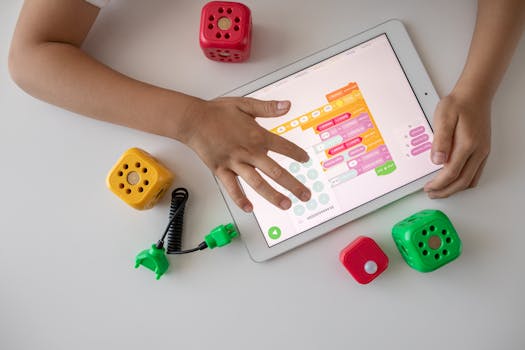 Photo: Robo Wunderkind / Pexels
For a more gamified approach to math, **Prodigy Math Game** transforms math practice into an epic fantasy adventure. Children create avatars, battle monsters, and explore worlds by answering curriculum-aligned math questions. This immersive experience makes math practice incredibly engaging, often leading children to spend hours learning without even realizing it. The app covers grades 1-8 and adapts to each child's learning level, ensuring they are always challenged appropriately. For science enthusiasts, **Tappity: Science for Kids** offers interactive lessons, experiments, and games covering a wide range of scientific topics, from biology to physics. Its engaging videos and hands-on activities make complex scientific concepts accessible and exciting, fostering a deep curiosity about the natural world.
Reading and writing skills continue to be paramount, and apps like **Epic! – Kids' Books and Reading** provide unlimited access to a digital library of over 40,000 books, audiobooks, and learning videos for children 12 and under. It's an invaluable resource for encouraging independent reading, exploring diverse genres, and building vocabulary. Features like read-to-me options and quizzes further enhance the learning experience. For developing coding skills, which are increasingly important, **ScratchJr** (for younger children, 5-7) and **Scratch** (for 8+) are fantastic free platforms developed by MIT. They allow children to create their own interactive stories, games, and animations by snapping together programming blocks, teaching computational thinking in a creative and accessible way. This not only introduces them to fundamental coding concepts but also hones their problem-solving and logical reasoning abilities.
Beyond core subjects, apps that encourage critical thinking and global awareness are also beneficial. **Duolingo** offers a fun and free way for children (and adults) to learn new languages through bite-sized lessons and gamified challenges, expanding their horizons and cognitive flexibility. For exploring geography and history, apps like **World Atlas by National Geographic** provide interactive maps, facts, and stunning visuals that bring the world to life. These apps move beyond rote memorization, encouraging children to ask questions, research, and connect information in meaningful ways. When choosing apps for this age group, look for those that offer depth of content, opportunities for creation, and features that support independent learning and critical analysis. Integrating these apps can significantly enhance a child's academic performance and develop a broader range of intellectual skills. You can also explore how these apps complement traditional learning methods in our article on innovative learning strategies.
Finally, consider apps that support executive functions like organization and time management. While not strictly 'educational' in the traditional sense, tools that help children manage their homework, schedules, and projects can significantly reduce stress and improve academic performance. Apps designed for creating mind maps or managing tasks can subtly teach valuable life skills that underpin academic success.
Maximizing Learning: Tips for Parents and Common Mistakes to Avoid
 Photo: Kampus Production / Pexels
Here are some key tips for parents:
- Curate and Preview: Don't download blindly. Research apps, read reviews, and ideally, try them out yourself before introducing them to your child. Ensure the content aligns with your values and educational goals.
- Set Screen Time Limits: While educational apps are beneficial, balance is key. Establish clear, consistent screen time rules to prevent overuse and ensure time for other crucial activities like outdoor play, reading physical books, and social interaction.
- Co-Play and Discuss: Engage with your child while they're using educational apps. Ask questions, discuss what they're learning, and even play alongside them. This interaction strengthens their understanding and makes learning a shared experience.
- Choose Age-Appropriate Content: Apps designed for older children can be frustrating for younger ones, and vice-versa. Always check the recommended age range and ensure the content matches your child's developmental stage.
- Look for Ad-Free Experiences: Ads can be distracting, inappropriate, or lead to unintended purchases. Prioritize premium, ad-free versions or apps specifically designed for children without commercial interruptions.
- Monitor Progress: Many educational apps offer parent dashboards or progress reports. Utilize these features to track your child's learning journey and identify areas where they might need additional support or challenge.
- Integrate with Real-World Learning: Connect what they learn in the app to real-life situations. If they learn about animals, visit a zoo. If they learn about numbers, count objects around the house. This reinforces concepts and makes learning more meaningful.
And here are common mistakes to avoid:
- Using Apps as Babysitters: While convenient, relying solely on apps to occupy children without engagement or purpose diminishes their educational value. Active supervision and interaction are vital.
- Ignoring Privacy Policies: Be aware of what data an app collects and how it's used. Choose apps from reputable developers with strong privacy practices, especially concerning children's data.
- Overlooking Offline Play: Don't let apps completely replace physical toys, creative play, and outdoor activities. A balanced approach is essential for holistic development.
- Falling for 'Edutainment' Traps: Some apps claim to be educational but are primarily entertainment with minimal learning content. Look for clear learning objectives and evidence of curriculum alignment.
- Skipping Parental Controls: Always utilize device-level parental controls to manage app access, screen time, and in-app purchases.
- Forcing Engagement: If a child isn't enjoying an app, don't force it. Learning should be engaging. There are countless alternatives; find one that resonates with their interests.
By following these guidelines, parents can transform digital devices into powerful learning allies, ensuring that screen time contributes positively to their child's intellectual and developmental growth.
Comparison
| Feature | ABCmouse.com | Prodigy Math Game | Khan Academy Kids |
|---|---|---|---|
| Age Range | 2-8 years | Grades 1-8 | 2-8 years |
| Subjects Covered | Reading, Math, Art, Music, Science | Math | Reading, Math, Logic, Social-Emotional |
| Curriculum Aligned | ✓ | ✓ | ✓ |
| Gamified Learning | ✓ | ✓ | ✓ |
| Parent Progress Reports | ✓ | ✓ | ✓ |
| Cost (Subscription) | Paid | Free (optional paid membership) | Free |
What Readers Say
"ABCmouse has been a game-changer for my 4-year-old. She's learning to read and do basic math, and she genuinely looks forward to her 'ABCmouse time.' It's incredible how much progress she's made with these best educational apps for kids."
Sarah J. · Austin, TX"My son used to dread math, but Prodigy Math Game turned it around. He's now actively asking to play, and his math scores have significantly improved. These educational apps for kids really know how to make learning fun."
David M. · Seattle, WA"We've tried several learning apps, but Khan Academy Kids is by far the most comprehensive and engaging for our first grader. The variety of activities keeps her interested, and I love that it's completely free. Truly one of the best educational apps for kids out there."
Emily R. · Denver, CO"Toca Boca apps are fantastic for creativity, though sometimes I wish they had a clearer academic focus. Still, for fostering imagination and open-ended play, they are excellent. It's a great balance to more structured educational apps for kids."
Mark T. · Boston, MA"As a former teacher, I'm constantly evaluating educational tools. Epic! is an absolute lifesaver for encouraging reading. My twins devour books on it daily, and it's boosted their vocabulary immensely. It's definitely among the best educational apps for kids for literacy development."
Jessica L. · Miami, FLFrequently Asked Questions
What age range are educational apps most effective for?
Educational apps are effective for a wide range of ages, from toddlers (2-3 years old) who benefit from basic shape and letter recognition, all the way through elementary and middle schoolers who can use apps for advanced math, coding, and language learning. The key is selecting age-appropriate content that matches their developmental stage and learning goals.
Are educational apps safe for my child's privacy?
The safety and privacy of children using educational apps are paramount. Always choose apps from reputable developers known for their commitment to privacy, especially those compliant with COPPA (Children's Online Privacy Protection Act). Read privacy policies carefully to understand what data is collected and how it's used. Many top-tier educational apps prioritize child safety with ad-free environments and secure data handling.
How can I choose the best educational app for my child?
To choose the best app, first consider your child's age, interests, and specific learning needs (e.g., reading, math, creativity). Look for apps with strong educational content, positive reviews, interactive features, and clear learning objectives. Preview the app yourself, check for an ad-free experience, and ensure it offers a balanced approach to learning that complements other activities.
Are free educational apps as good as paid ones?
Many excellent educational apps are available for free, such as Khan Academy Kids or PBS KIDS Games, offering high-quality content. However, paid apps or subscription services often provide a more comprehensive curriculum, an entirely ad-free experience, and advanced features like personalized learning paths and detailed progress tracking. The 'best' option depends on your budget and specific educational requirements.
How do educational apps compare to traditional learning methods?
Educational apps complement, rather than replace, traditional learning methods. They offer interactive, personalized, and engaging experiences that can reinforce classroom lessons, provide extra practice, and cater to diverse learning styles. While apps excel in engagement and immediate feedback, traditional methods still provide crucial social interaction, hands-on experiences, and direct instruction from educators. A blended approach is often most effective.
Who should use best educational apps for kids?
The best educational apps for kids are suitable for any child whose parents wish to supplement their learning, enhance specific skills, or make screen time more productive. They are particularly beneficial for children who are visual learners, those needing extra practice in a fun format, or children with a strong interest in technology. They can also be a valuable resource for homeschooling families or for keeping skills sharp during school breaks.
Can educational apps cause screen addiction in children?
While educational apps offer significant benefits, excessive screen time, even with educational content, can contribute to screen dependency. The key is moderation and parental guidance. Establish clear time limits, encourage breaks, and ensure a balance with other activities like outdoor play, reading physical books, and social interactions. Active parental involvement in selecting and monitoring app usage helps mitigate risks.
What are the future trends for educational apps for kids?
Future trends in educational apps for kids are leaning towards even more personalized and immersive experiences. Expect to see increased integration of AI for adaptive learning, virtual and augmented reality (VR/AR) for highly interactive lessons, and greater emphasis on social-emotional learning (SEL) content. Gamification will continue to evolve, making learning even more engaging and tailored to individual cognitive profiles.
Empower your child's learning journey today by exploring the vast world of educational apps. With the right choices, you can transform screen time into a powerful tool for growth, curiosity, and academic success. Discover the best educational apps for kids and unlock their full potential!