Unlocking Potential: Benefits of Early Childhood Education
benefits of early childhood education

Unlocking Potential: Benefits of Early Childhood Education

Investing in early learning profoundly impacts a child's future, fostering critical skills and lifelong success.

Explore the Benefits

Key Takeaways

  • ✓ Children in high-quality early education programs are more likely to graduate high school and attend college.
  • ✓ Early childhood education leads to better health outcomes and reduced crime rates in adulthood.
  • ✓ For every dollar invested in high-quality early education, society sees a return of $4 to $9 due to increased tax revenue and reduced public services.
  • ✓ 85% of brain development occurs before age five, making early experiences crucial for cognitive growth.

How It Works

1
Cognitive Development

Early education stimulates brain growth through engaging activities, enhancing problem-solving, language, and critical thinking skills. Children learn foundational concepts crucial for later academic success.

2
Social-Emotional Learning

Children learn to interact with peers and adults in a structured environment, developing empathy, cooperation, and conflict resolution skills. This builds a strong emotional foundation.

3
Pre-Academic Skills

Exposure to letters, numbers, shapes, and early literacy concepts prepares children for formal schooling. They develop a love for learning and a readiness for kindergarten challenges.

4
Long-Term Success

The skills and dispositions acquired in early childhood education translate into higher academic achievement, better career prospects, and improved health and social outcomes throughout life.

The Profound Impact of Early Learning on Cognitive Development

A close-up of a child arranging wooden blocks on the floor, focused on play. Photo: www.kaboompics.com / Pexels
The human brain undergoes its most rapid and significant development during the early years of life, specifically from birth to age five. This period is a critical window of opportunity, where experiences shape the brain's architecture, laying the groundwork for all future learning, behavior, and health. High-quality early childhood education (ECE) programs are specifically designed to capitalize on this developmental window, offering environments rich in stimulating activities that profoundly impact cognitive development. One of the primary ways ECE fosters cognitive growth is through exposure to a language-rich environment. Children in these settings engage in conversations with teachers and peers, listen to stories, sing songs, and participate in rhyming games. This constant interaction expands their vocabulary, improves their phonological awareness – the ability to recognize and manipulate the sounds of spoken language – and strengthens their comprehension skills. These are all foundational elements for literacy development. Studies consistently show that children who attend high-quality preschools exhibit stronger pre-reading skills, such as letter recognition and understanding of print concepts, compared to their peers who do not. Beyond language, ECE programs introduce children to foundational mathematical concepts in an age-appropriate and engaging manner. Through play with blocks, puzzles, and sorting activities, children learn about shapes, sizes, patterns, and numbers. They develop an intuitive understanding of quantity, spatial relationships, and problem-solving. These early mathematical experiences are not just about memorization; they cultivate a curiosity about numbers and logical thinking that is crucial for later academic success in STEM fields. Furthermore, ECE environments are designed to encourage critical thinking and problem-solving. When children encounter a challenge, whether it's figuring out how to build a tall tower that won't fall or negotiating turns on a swing, educators guide them to think through solutions, test hypotheses, and learn from their mistakes. This process cultivates executive function skills, including working memory, cognitive flexibility, and inhibitory control. These skills are essential for self-regulation, planning, and achieving goals, and they are strong predictors of academic and life success. The structured yet flexible nature of early learning settings provides countless opportunities for children to practice and refine these crucial cognitive abilities, fostering a proactive approach to learning and exploration. Learn more about cognitive development in early years and how it shapes future learning pathways.

Cultivating Social and Emotional Intelligence in Preschool

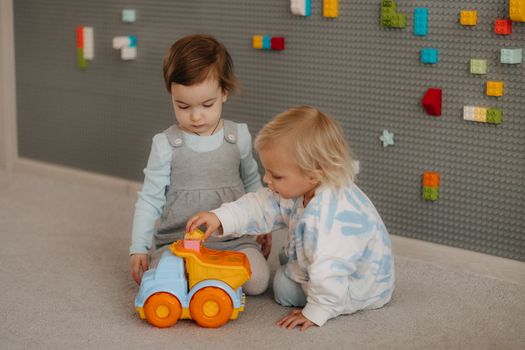
Two toddlers happily playing with a toy truck indoors, surrounded by colorful blocks. Photo: Polesie Toys / Pexels
The development of social and emotional intelligence is arguably one of the most significant benefits of early childhood education. While academic skills are vital, the ability to understand and manage one's own emotions, empathize with others, and navigate social situations effectively is equally, if not more, important for overall well-being and success in life. ECE provides a unique and structured environment where children can practice and refine these critical social-emotional skills long before they enter formal schooling. In a preschool setting, children are immersed in a diverse peer group, requiring them to learn how to share, take turns, and cooperate. These seemingly simple interactions are complex learning opportunities. For instance, sharing a toy teaches patience and negotiation, while taking turns on a slide builds an understanding of fairness and rules. Teachers act as facilitators, guiding children through conflicts, modeling appropriate social behavior, and helping them articulate their feelings. This explicit teaching of social skills helps children develop a strong foundation for positive relationships throughout their lives. Emotional regulation is another cornerstone of social-emotional development fostered in early education. Young children often experience intense emotions – frustration, excitement, sadness – and may lack the tools to express them constructively. ECE programs equip children with strategies to identify their feelings, communicate them verbally, and cope with challenging emotions in healthy ways. This might involve teaching them deep breathing exercises, providing a 'calm-down corner,' or using emotion charts. By learning to manage their emotions, children become more resilient, less prone to disruptive behavior, and better able to focus on learning. Empathy, the ability to understand and share the feelings of another, is nurtured through group activities, storytelling, and discussions about characters' feelings. When a child sees another peer upset, an educator might prompt a conversation about why the child is sad and what could make them feel better. This helps children develop perspective-taking skills and fosters a sense of compassion. These early experiences in empathy are crucial for building strong friendships, fostering inclusive communities, and developing into responsible, caring citizens. The consistent opportunities for guided social interaction and emotional exploration in ECE settings are invaluable for shaping well-rounded individuals.

Building a Foundation for Lifelong Success: Academic Readiness and Beyond

Group of children in graduation gowns holding diplomas outdoors in Hà Nội, Việt Nam. Photo: ANH LÊ / Pexels
The benefits of early childhood education extend far beyond the immediate gains in cognitive and social-emotional development; they lay a robust foundation for lifelong success, impacting academic achievement, career trajectories, and overall well-being. One of the most direct benefits is enhanced academic readiness. Children who participate in high-quality ECE programs are significantly better prepared for kindergarten. They arrive with a stronger grasp of pre-reading skills, basic math concepts, and the ability to follow directions and work independently – all crucial for a smooth transition into elementary school. This head start often translates into higher academic performance in later grades, reducing the need for remedial services. Research consistently demonstrates a correlation between early education and long-term educational attainment. Studies, such as those on the Perry Preschool Project and the Abecedarian Project, have shown that participants in high-quality early interventions are more likely to graduate from high school, attend college, and earn higher degrees. This educational momentum is not accidental; it stems from the early cultivation of a love for learning, strong executive function skills, and the confidence to tackle academic challenges. These foundational experiences create a positive feedback loop, where early success fuels later motivation and achievement. Beyond academics, the skills developed in ECE programs contribute to greater economic self-sufficiency in adulthood. Individuals who received early education tend to earn higher incomes, are less likely to rely on public assistance, and have more stable employment. The social-emotional skills learned – such as collaboration, communication, and problem-solving – are highly valued in the modern workforce. These 'soft skills' are increasingly recognized as essential for career success, adaptability, and leadership, making early childhood an opportune time to develop them. Furthermore, the long-term benefits extend to societal well-being. Studies indicate that investments in early childhood education lead to reduced crime rates, improved public health outcomes, and increased civic engagement. Children who attend quality programs are less likely to be involved in the criminal justice system and tend to make healthier lifestyle choices. The cumulative effect of these individual benefits creates a more educated, productive, and healthier society. Thus, early childhood education is not merely an investment in a child's future but a strategic investment in the future of the entire community. Discover more about long-term educational outcomes and their societal impact.

Maximizing the Benefits: Tips for Choosing an Early Childhood Education Program

Child plays pretend doctor with stethoscope and adult, fostering imagination indoors. Photo: Yan Krukau / Pexels
Choosing the right early childhood education program for your child is a crucial decision that can significantly impact their developmental trajectory. With various options available, from home-based daycares to structured preschools, understanding what to look for can help maximize the benefits. Here are key tips to guide your selection: * **Prioritize Program Quality:** Look for programs that are licensed and accredited by recognized organizations (e.g., NAEYC). Quality indicators include small class sizes, low child-to-teacher ratios, and educators with formal training in early childhood development. These factors ensure individualized attention and a stimulating learning environment. * **Observe the Learning Environment:** Visit potential centers and observe the interactions. Do children seem engaged and happy? Are teachers actively interacting with children, asking open-ended questions, and facilitating play? A vibrant, child-centered environment where exploration is encouraged is ideal. * **Review the Curriculum:** Inquire about the program's curriculum. A high-quality program should offer a balanced approach that supports cognitive, social, emotional, and physical development through play-based learning. It should not be solely focused on academic drills but rather on fostering a love for learning. * **Assess Teacher Qualifications and Stability:** Experienced and well-trained teachers are the backbone of any excellent ECE program. Ask about teacher qualifications, ongoing professional development, and staff turnover rates. Consistency in teaching staff provides a sense of security and stability for children. * **Consider Communication and Parental Involvement:** A strong partnership between home and school is vital. Look for programs that actively communicate with parents, provide regular updates on a child's progress, and offer opportunities for parental involvement, such as volunteering or parent-teacher conferences. * **Evaluate Safety and Health Protocols:** Ensure the facility meets high standards for cleanliness, safety, and health. This includes secure entryways, age-appropriate equipment, and clear procedures for illness, emergencies, and allergies. A safe environment allows children to explore and learn without undue risk. **Common Mistakes to Avoid:** * **Choosing solely based on cost or convenience:** While budget and location are practical considerations, they should not be the sole determinants. A cheaper or closer option might not offer the quality your child needs. * **Ignoring your child's personality:** Consider your child's temperament. Some children thrive in more structured environments, while others prefer more free-form play. The best program is one that aligns with your child's individual needs. * **Not asking enough questions:** Don't hesitate to ask detailed questions about everything from discipline policies to daily routines. A transparent program will welcome your inquiries. * **Overlooking the 'feel' of the place:** Trust your instincts. If a program doesn't feel right, it probably isn't the best fit for your family. The emotional atmosphere is as important as the academic one. By carefully considering these factors, you can select an early childhood education program that provides the maximum benefits for your child's growth and development.

Comparison

FeatureHigh-Quality ECEHome-Based DaycareParent-Led Learning
Teacher QualificationsCertified ECE educatorsVaried, often informalParent's own knowledge
Curriculum StructurePlay-based, holisticFlexible, less structuredInformal, child-led
Social InteractionDiverse peer groupSmaller, limited peer groupLimited, family-focused
Kindergarten Readiness✗ (variable)✗ (variable)
Emotional Regulation SupportStructured guidanceInformal guidanceParent's own approach
Access to ResourcesSpecialized materials, therapistsLimited specialized resourcesParent-sourced resources

What Readers Say

"Sending my daughter to preschool was the best decision. She learned to share, speak up for herself, and developed a real love for books. The benefits of early childhood education are truly transformative for young kids."

Sarah J. · Austin, TX

"Our son, previously shy, blossomed in his ECE program. He's now confident, asks questions constantly, and is excited about school. It's clear the early learning environment significantly boosted his social skills."

Mark T. · Seattle, WA

"Thanks to early childhood education, my child started kindergarten already knowing her letters and numbers. More importantly, she knew how to make friends and solve simple conflicts, which made the transition seamless and positive."

Emily R. · Boston, MA

"While initially hesitant about the cost, seeing the cognitive and social growth in my child confirmed the value. The program could have offered more flexible hours, but the educational benefits were undeniable and worth it."

David L. · Denver, CO

"As a former teacher, I deeply appreciate the structured play and skilled educators in ECE. My niece, who attended, demonstrates advanced problem-solving and empathy, showcasing the profound benefits of early childhood education."

Jessica M. · Chicago, IL

Frequently Asked Questions

What are the primary benefits of early childhood education for children?

The primary benefits of early childhood education include enhanced cognitive development (language, math, problem-solving), improved social-emotional skills (empathy, cooperation, emotional regulation), better academic readiness for kindergarten, and long-term positive outcomes in education, career, and health. It establishes a strong foundation for lifelong learning.

Is early childhood education truly necessary, or can children learn enough at home?

While a stimulating home environment is invaluable, early childhood education offers unique benefits that are difficult to replicate at home. It provides structured social interaction with diverse peers and trained educators, exposure to a specialized curriculum, and a dedicated environment for developing independence and pre-academic skills, preparing children for formal schooling in ways home learning often cannot.

How do I choose the best early childhood education program for my child?

To choose the best program, look for licensed and accredited facilities with qualified teachers, low child-to-teacher ratios, and a play-based curriculum that fosters holistic development. Observe the environment for child engagement, inquire about communication with parents, and ensure strong safety and health protocols. Consider your child's temperament and your family's values.

Is the cost of early childhood education worth the investment?

Absolutely. Numerous studies demonstrate a significant return on investment for high-quality early childhood education, not only for individual children (higher earnings, better health) but for society as a whole (reduced crime, increased tax revenue). The long-term benefits far outweigh the initial financial outlay, making it a sound investment in human capital and societal well-being.

How does early childhood education compare to standard daycare?

While both provide childcare, early childhood education programs are distinguished by their intentional focus on developmental learning. They typically follow a structured curriculum designed to foster cognitive, social, and emotional growth through play, guided activities, and qualified educators. Standard daycare may focus more on supervision, whereas ECE aims for holistic development and kindergarten readiness.

Who should consider enrolling their child in an early childhood education program?

All families should consider enrolling their child. While particularly beneficial for children from disadvantaged backgrounds, high-quality early childhood education offers universal benefits for every child, enhancing their cognitive abilities, social skills, and emotional intelligence, regardless of their home environment. It prepares every child for a successful transition to kindergarten and beyond.

Are there any risks or downsides to early childhood education?

The primary 'risk' lies in choosing a low-quality program, which may not deliver the intended benefits or could even be detrimental. Overly academic or highly rigid programs that disregard play and child-led exploration can also be less effective. However, high-quality, play-based ECE programs have overwhelmingly positive outcomes with minimal downsides.

What future trends are impacting early childhood education?

Future trends include an increased focus on personalized learning, integration of technology for educational purposes, greater emphasis on social-emotional learning, expanded access to high-quality programs for all income levels, and continued research into brain development to refine teaching methodologies. The push for universal preschool is also a significant ongoing trend.

Embrace the profound advantages that early childhood education offers your child. Explore high-quality programs today to unlock their full potential and set them on a path toward lifelong learning and success. Invest in their future, starting now.

Topics: benefits of early childhood educationpreschool advantageschild developmentkindergarten readinessearly learning impact
Leo List
Brampton weed
Adultwork